You’re offline. This is a read only version of the page.

Adding to that instability, several significant violent incidents have happened in the last year. In March 2025, a massacre was reported against the Alawite people—an ethnoreligious group the Assad family belonged to—in the coastal areas, leading to the deaths of more than 1,000 to 2,000 people, depending on which source you believe. Among those who lost their lives were five Christians.
Further violence broke out in southern Syria in April, May and July in the Druze-majority Suweyda province (the Druze are another ethnoreligious minority in the country). The violence was primarily between Bedouin tribes, local Druze groups and the transitional government forces. This conflict led to the death of about 1,000 people, including 539 Druze civilians.
And finally, there was the bombing of St. Elias Church in Damascus on June 22, where 25 people were killed—22 of them Christians—and about 60 Christians were injured. The terror attack was a profound shock. For a week, churches throughout Syria were almost empty, and all their activities were postponed.
New challenges, familiar pressure
Throughout the year, daily life became more challenging for Christians due to different forms of persecution.
The new government’s Islamic extremist background has caused deep anxiety among the Christian population. Islamic influence is now felt fully in state and government facilities. “Everywhere, a sheikh appears to be making key decisions, in the government but also in the checkpoints,” several church leaders stated.
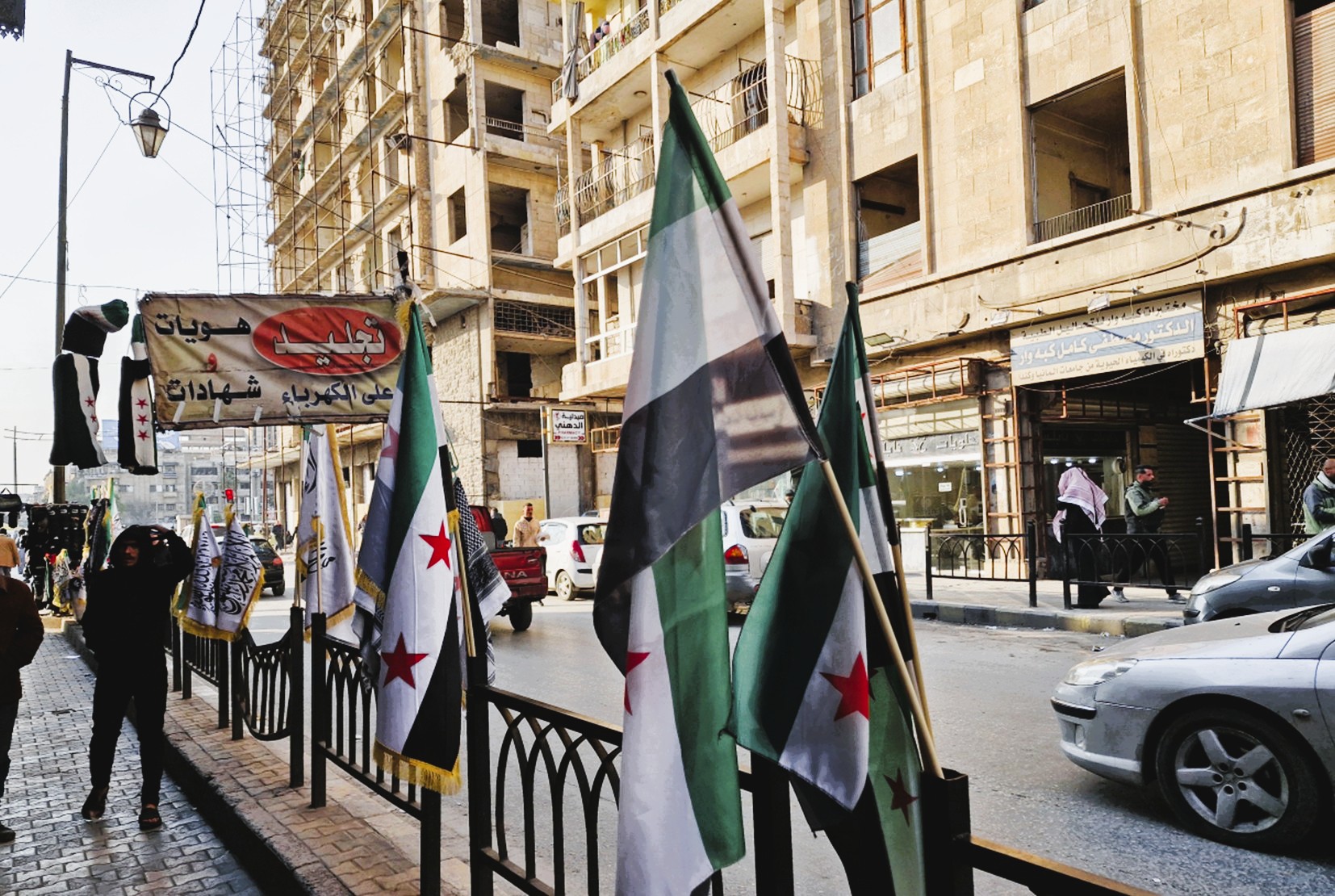
Changes can be seen in the streets, as the former rebels—who before the fall of the Assad regime only controlled the city of Idlib and its surroundings under their control—are now spread throughout the country.
Compared to the past, children in public schools hear offensive words more often. “It’s so hard that some families from our congregation refrained from sending their children to schools because of them being harmed by verbal abuse because they are Christians,” shares Father Yohana, priest of the Syriac Orthodox Church in Homs. Consequently, some families have decided to bear the burden of transportation and send their children to study in villages in the predominantly Christian countryside rather than leave them in the city. “What’s even more sad is that the church is powerless to change this reality,” he adds.
While Islamic students have teachers for their Islamic lessons in public schools, there are no teachers for Christian lessons. in the same way. Instead, Christian children are often relegated to another classroom during Islamic lessons with nothing to do. Hanan, a mother of five children in Damascus, speaks of the desperation to preserve their children’s faith and identity. “I want to send my kids to learn catechism; I want them to learn about Christianity in their school,” she explains.
In the streets, Christian women face insults, often called “unvalued” or “infidels.”
“I live in fear for my family,” says Wael, a female worker in one of the churches in Homs. “Throughout the year, my children saw a lot of different people with beards and guns, calling their mother an infidel. They are now scared to go to the streets or go to the church on their own.”
Even the clergy face abuse. “Last week, some guys suddenly spat on me when I was in the street,” Father Isaac says sadly. He’s a church leader from Homs. “They were not from the area. I just walked away with no response because it’s not the way we as Christians act.”
“The youth felt frustrated, believing that the time for changing the minds of the people around them had tragically passed,” Bishop Tobji in Aleppo sadly says. “We invited 150 youth to attend a dialogue session about citizens and the new Syria … only four came.”
So, a year later, the question remains: Where does the Christian community fit in the new Syria?
Christians who run small businesses—especially those who have shops in Muslim-majority areas—saw a drop in the number of clients. “In better times, [these business owners] would support the church; now they need the church support,” Wael observes.
And recently, threatening words were written on church walls and in Christian areas, threatening to kill Christians.
Syrian believers also find themselves caught in the middle of violence that doesn’t target their communities. In the Druze-majority region around Suweyda, more than half of the Christians who live there have been internally displaced, fleeing the lack of safety. “I don’t know how I could start again,” says Fadi, a 52-year-old man from Suwayda. His barbershop and house were burned by an unknown group, and now he lives in a rented house in Damascus.
“After the war, we worked to restore the church, and now I see it emptying again … but we continue to perform our worship services; the church never gives up,” says the pastor of the Evangelical Church in Kharaba, a village in the
Suwayda province.
Even in the part of Syria under Kurdish control, which is generally safer for Christians, persecution has risen. This school year, the Kurdish authorities enforced the use of the Kurdish language curriculum in all schools. This led to the closure of 14 Christian schools that taught in Arabic. After lengthy negotiations, the authorities finally allowed the churches to open their schools, but classes were delayed by more than a month.
All this makes many Christians search for a safe place outside Syria. “I cannot see any positive changes because I don’t feel secure; all the people around me want to leave,” says Nariman, a worker in a church in Syria.
Despite the climate of fear, the church is witnessing one very positive development. “A lot of Muslims, not from here, came to the church and asked about it and about what we are doing. We have a great opportunity to show the people who the real Christians are,” says Bishop Tobji in Aleppo.
The number of people who convert to Christianity is increasing. This includes some individuals who have returned to Syria from camps in other countries, having become Christians during their displacement.
“After all the violence in the country, some non-Christians are now more open to hear about Christianity, because they see that Christianity brings peace, and we hope that God will touch their hearts,” says Razzok, a pastor at the Alliance church in Homs. This trend is also prevalent among the Kurds and the Druze in Syria.
Amidst all changes and uncertainty, Christians still find safety in the church. “All this never prevented the church from continuing its mission,” says Pastor Abdulla from the Alliance church in Aleppo. “Rather, it was a renewed start with greater faith and courage.”
Father Issac in Homs echoes this feeling: “The people have become more attached to the faith, and that is a joyful thing, because no matter what they faced, their faith will not weaken.”
The future of the Christian community in post-Assad Syria remains a precarious balance between deeply held faith and crippling fear of instability. But there is hope: “I have faith that this darkness precedes a divine intervention, allowing the church in Syria to not only survive but to stand steady, unmovable, and firm in its ancestral home,” Pastor Abdalla says.
Thanks to your gifts and prayers, Open Doors’ local partners continue to stand with the local church throughout Syria.